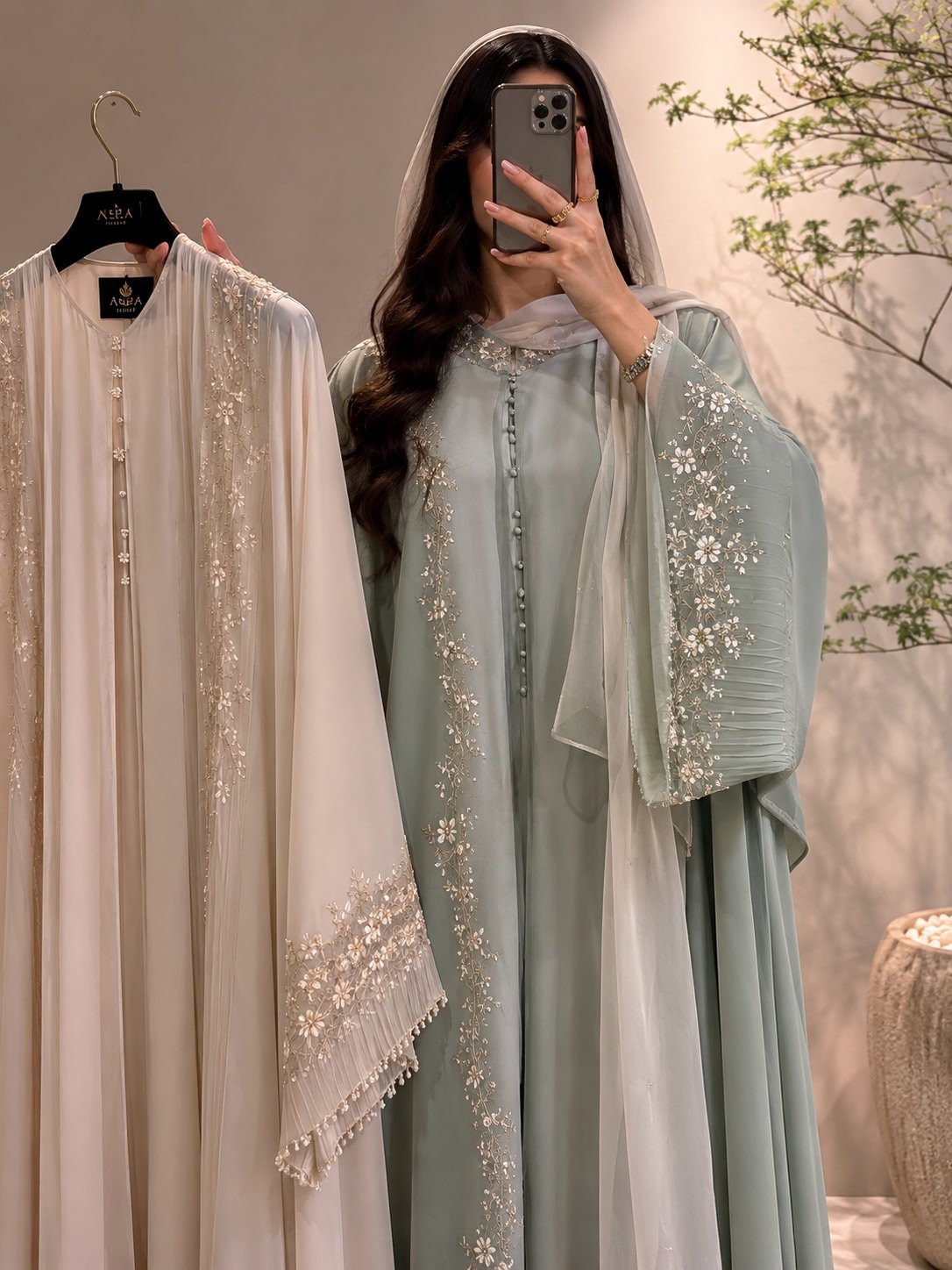
The best fabric for an abaya is the material that delivers the intended coverage, drape, comfort, appearance, care and construction performance for that specific product. Nida, crepe, chiffon, georgette, satin, jersey and linen are useful commercial categories, but their names do not guarantee composition, weight, opacity or quality. A brand needs a physical reference and an approval route, not only a fabric name.
Decision comparison
Abaya fabrics compared by product decision
These are common tendencies, not guaranteed properties. Approve the actual supplier quality, colour and construction for the project.
| Fabric family | Useful product direction | Controls to confirm |
|---|---|---|
| Nida and soft woven qualities | Fluid everyday abayas and clean modest silhouettes | Composition, weight, opacity, snagging and lot consistency |
| Crepe | Controlled drape from soft dresses to more defined panels | Exact quality, texture, bias growth, seam behaviour and pressing |
| Chiffon and georgette | Overlays, sleeves, capes and layered occasion pieces | Sheerness, lining, cutting stability, seam and hem finish |
| Satin and lustrous fabrics | Evening, formal and statement products | Cling, shine, needle marks, pressing and water spotting |
| Jersey and stretch knits | Soft casual dresses and movement-led garments | Recovery, cling, opacity under stretch, pilling and stabilisation |
| Linen, cotton and blends | Relaxed warm-weather dresses, tunics and abayas | Wrinkling, shrinkage, colourfastness, opacity and care response |
1. Define what best means for the abaya
Begin with the wearer, use, climate, silhouette, coverage requirement, expected care, target price and brand position. An everyday open abaya, a lined occasion style and a relaxed modest dress ask different things from the fabric. A material that is successful for one can create excess heat, cling, transparency or construction problems in another.
Translate the concept into reviewable criteria: fluid or structured drape, matte or lustrous surface, required opacity, stretch or stability, wrinkle tolerance, lining plan, wash or dry-clean route and any print or embellishment process. Rank the criteria because one fabric rarely maximises every property at the same cost.
- Target wearer and climate
- Everyday, work, travel or occasion use
- Fluid, structured or layered silhouette
- Coverage and lining requirement
- Care expectation and price position
2. Treat fabric names as categories, not specifications
Nida and crepe are commercial names used across many supplier qualities. Two fabrics carrying the same name can differ in fibre content, construction, weight, width, finish, colour, hand, sheen and performance. Terms such as Korean nida, Saudi crepe or premium georgette should not replace an exact supplier reference and physical approval.
Request the available composition, usable width, weight or quality code, colour reference, finish, care direction, stock status and minimum basis. Keep a labelled cutting from the reviewed roll. If the supplier, colour, finish or production lot changes, decide which checks must be repeated rather than assuming the name guarantees equivalence.
3. Review nida and crepe by actual quality
Nida qualities are often considered for fluid everyday abayas because they can provide a smooth surface and controlled movement. Crepe covers a broad family ranging from lightweight, soft qualities to heavier fabrics with more visible texture or body. Either category can work for clean, flared or panelled silhouettes when the specific quality supports the design.
Compare drape at full garment length, opacity in the intended colour, surface snagging, seam slippage, pressing response and recovery after handling. Check whether a heavier quality pulls at shoulder seams or distorts a wide hem, and whether a lighter quality collapses details that need definition. Choose between samples, not between category labels alone.
4. Use chiffon and georgette as planned layers
Chiffon is commonly light and sheer, while georgette often has more texture and body; the exact behaviour still depends on composition and quality. These fabrics can support overlays, sleeves, capes, scarves, gathered panels and occasion details, but coverage must be assessed with the complete garment system rather than the top layer alone.
Approve the main fabric, lining or inner dress together. Test cutting stability, seam grin, puckering, needle damage, edge fraying and the selected hem or binding. Inspect the sample over a contrasting underlayer and in movement. A visually delicate fabric still needs construction instructions that the sample room can repeat.
5. Control satin and formal surfaces
Satin describes a surface effect rather than one fixed fibre or weight. It can create strong light response for formal abayas, kaftans and modest dresses, yet lighter qualities may cling and show seam ripples while heavier qualities can increase weight and reduce fluidity. The right balance depends on silhouette and finish.
Review water spotting, abrasion, snagging, needle marks, pressing shine and colour appearance under event lighting or flash. Test interfacing and seam finishes before committing to the full garment. For bias-cut or very fluid sections, allow the sample to hang before confirming the final hem level and record the approved handling method.
6. Assess jersey, linen, cotton and blends
Jersey and other stretch knits can support soft casual dresses and movement-led modest garments. Their comfort does not remove the need to review cling, opacity under stretch, edge curling, recovery, pilling and seam stabilisation. The pattern and measurements must account for the approved fabric's stretch behaviour rather than treating all jersey as interchangeable.
Linen, cotton and their blends can suit relaxed warm-weather styles, but breathability, crispness, wrinkling, recovery and shrinkage vary with construction and finishing. Wash the intended colour and evaluate opacity, dimensional change and appearance after drying and pressing. Care instructions should follow the tested product route, not fibre content alone.
7. Compare colour, opacity and lining together
The same quality can behave differently in black, white, pastel and saturated colours. Review every proposed colour over skin-tone and high-contrast references under daylight and relevant indoor light. Test the fabric relaxed and under the amount of tension created at the body, sleeves, seat, pockets and closures.
If lining is required, select it as part of the product rather than as a late correction. Check combined opacity, heat, static, cling, colour cast, drape, seam bulk and care compatibility. Record whether the garment is fully lined, partly lined or designed with a separate inner layer and identify the approved references for each component.
8. Test construction, artwork and embellishment
A fabric is not approved only because it looks attractive on a hanger. Sew representative seams, hems, closures, pockets and stress areas using the proposed needle, thread, stitch and pressing route. Review seam slippage, puckering, shine, needle holes, distortion and reinforcement where the garment will be handled or carry weight.
Print, embroidery, beadwork, appliqué and heat-applied details need tests on the actual base or an agreed representative quality. Check colour, scale, adhesion or attachment, puckering, reverse-side finish, added weight and drape. A motif approved on paper or on another fabric does not prove performance on the selected abaya quality.
9. Make a representative full-length sample
A small swatch can show colour and hand, but it cannot prove how several metres behave as a long garment. Make the relevant sample in the intended or agreed representative fabric, colour, lining and construction. Review it on the intended body range while standing, walking, sitting and raising the arms.
Check hem balance, sleeve movement, front opening, coverage, static, heat, pocket strain and whether the fabric supports the silhouette shown in the technical design. Record measured changes and link the accepted sample to the current specification. If the bulk quality later changes, the original approval should not be treated as evidence for the substitute.
10. Approve bulk fabric with a traceable record
The release record should identify supplier, quality or article code, composition if confirmed, usable width, weight if used, colour, finish, lot or batch where relevant, approved swatch or sample, date and current style references. State any permitted tolerance or test requirement that the responsible supplier has agreed for the project.
Before cutting, compare received bulk fabric with the approved reference for shade, width, visible defects, hand, weight or construction where applicable and the required test results. Confirm roll allocation and shade grouping when variation could affect one garment or coordinated pieces. Document substitutions and obtain approval before use rather than resolving them after assembly.
- Supplier and exact quality reference
- Approved colour and physical swatch
- Width, weight and composition information available
- Sample and test evidence
- Bulk lot and shade record
- Written substitution and release status
11. Confirm sourcing, cost and Zameett scope
Fabric cost must be reviewed with usable width, garment consumption, cutting allowance, defect or shade risk, lining, care, freight and the supplier's order conditions. A lower price per metre may not reduce garment cost if the fabric is narrow, unstable, difficult to cut or requires an additional layer. MOQ can also depend on fabric, colour, finish and the selected supplier.
Zameett provides design and technical-development services across apparel categories, with sampling and manufacturing specialisation mainly in modest wear and abayas. The proposal confirms fabric-sourcing responsibilities, approved references, garment samples, testing or supplier evidence, deliverables, revisions, fees, assumptions, exclusions, project-specific timeline and MOQ basis before payment.
- Garment, use and target price
- Fabric and colour direction
- Proposed quantity and size range
- Lining, artwork and embellishment
- Care and testing expectations
- Destination and target timing
Frequently Asked Questions
Questions about this topic
What is the best fabric for an abaya?
There is no universal best fabric. The suitable choice depends on the intended silhouette, coverage, climate, colour, care, construction, price and supplier quality. Compare physical samples and approve the chosen fabric through a representative garment.
Is nida better than crepe for abayas?
Neither name guarantees a better result. Nida and crepe cover varied qualities, so compare the exact options for drape, opacity, surface, weight, seam behaviour, care and the product direction.
Which abaya fabrics need lining?
The decision depends on the actual fabric, colour, stretch, garment construction and required coverage. Chiffon and other sheer qualities commonly need a lining or inner layer, but every proposed colour and material should be assessed as part of the finished garment.
How should fabric opacity be tested for modest wear?
Review the intended colour and layer combination under daylight and relevant indoor light, both relaxed and under garment-level tension. Confirm the result on a representative full-length sample rather than relying only on a folded swatch.
What should be approved before ordering bulk abaya fabric?
Approve the exact supplier quality and colour, physical swatch, required lining, construction and artwork tests, representative garment sample, available technical information, commercial terms and the record used to compare incoming bulk fabric.
Apply This to Your Collection
Develop your next product with a clear scope.
Share your category, style count, available files, quantity and target date. Zameett will recommend the most suitable design, technical-development, sampling or reviewed production route.