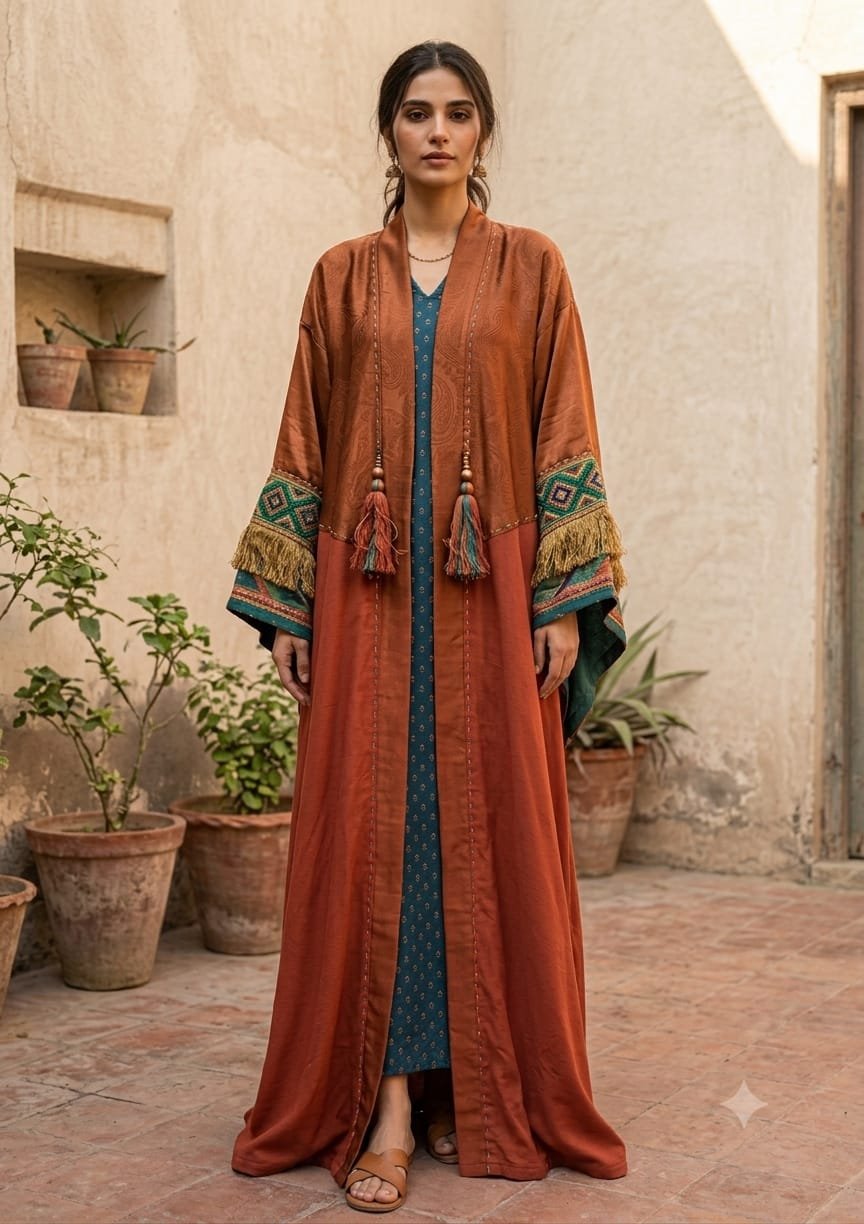
Abaya MOQ is not one universal industry number. A project can have several overlapping minimums for the garment, fabric, colour, embellishment, labels, packaging and specialist suppliers. The useful question is not only ‘What is your MOQ?’ but ‘Which part of this exact product creates each minimum, and how will the units be divided?’
Decision comparison
Abaya MOQ drivers and decisions
Map the minimum behind each production input before deciding how many units to order.
| MOQ driver | What can create the minimum | Decision to confirm |
|---|---|---|
| Garment and style | Construction, setup and production-line assumptions | Per-order or per-style basis |
| Fabric and colour | Stock status, roll length, dyeing, width and consumption | Material allocation and excess ownership |
| Embellishment | Artwork setup, technique, components and specialist supplier | Minimum per motif, colour or process |
| Branding and packaging | Labels, tags, bags, inserts and print setup | Shared quantities and unused balance |
| Size split | Cutting plan and units across each size combination | Permitted ratio and matrix depth |
1. Treat MOQ as a set of minimums
MOQ is the smallest quantity a supplier will accept under a defined commercial and production scope. One number may apply to the whole order, while other minimums apply per style, fabric, colour, motif, trim or branded component. These conditions can overlap rather than replace one another.
Ask the supplier to identify the constraint behind every figure. A garment-making minimum does not automatically resolve a fabric mill, dyeing, embroidery, label or packaging minimum. The quotation should show which minimum governs the final order and what happens to any material or component balance.
2. Confirm the production route before comparing numbers
Catalogue, stock-product, adapted private-label and custom-development routes can have different starting points and constraints. An available garment or stock material may reduce some setup, while an original silhouette, custom colour or specialist finish introduces new development and sourcing decisions.
Do not compare two MOQ figures until the routes are comparable. Confirm what is already developed, what the brand may change, which technical files and samples are required, whether materials are stock or custom, and which approvals are included. A smaller number attached to a different product route is not necessarily a better commercial offer.
3. Convert the total into a style-colour-size matrix
A total order quantity can look workable until it is divided. For example, several styles, colours and sizes create many individual combinations, each with fewer units. This fragmentation affects fabric allocation, cutting, bundling, labels, inspection and the chance that the size curve matches real demand.
Build a matrix with one row for every style and colour and one column for every size. Enter the proposed units, total each row and check the complete order. Then ask whether the supplier permits size mixing, whether a minimum applies per style or colour, and whether the size ratio changes material use or price.
4. Understand fabric, colour and consumption constraints
Fabric availability often creates the first practical limit. Stock fabric in an approved colour may support a different route from custom dyeing, weaving, printing or a specially developed finish. Roll length, usable width, shade continuity, cutting loss and garment consumption all influence how many abayas can be produced from the purchased material.
Confirm the exact fabric reference, colour, width, approximate consumption basis and whether the supplier is reserving stock or placing a new material order. Ask how leftover fabric will be recorded, stored, returned or used, and who owns it. Never assume the same fabric name guarantees the same drape, opacity, shade or care performance.
5. Separate embellishment and component minimums
Machine embroidery may require digitising, thread setup, hoop planning and a minimum by motif or colour. Hand beadwork and mixed techniques depend on component sourcing, specialist labour and an approved attachment standard. Lace, appliqué, buttons, zips or other decorative components may each introduce another supplier threshold.
Approve artwork dimensions, technique, placement, thread or component references and an appropriate physical test before fixing the bulk quantity. A material or component minimum can exceed the garment quantity, so the proposal should state whether excess items remain with the brand, are stored for reorders or are treated another way.
6. Scope labels and packaging independently
Main labels, size labels, care or composition labels, hangtags, stickers, bags, tissue, inserts and carton markings can have separate artwork, setup and order minimums. Their quantity may not match the garment MOQ, particularly when one component is shared across styles or purchased for future runs.
Confirm wording, artwork, dimensions, material, colour, placement and attachment before ordering. Record the purchased quantity, the quantity used for this order and the treatment of any balance. The brand remains responsible for confirming the labelling and packaging requirements that apply to its product and destination.
7. Use sampling to validate the quantity decision
MOQ and sampling are connected. A design that still has unresolved fit, drape, construction, embellishment or material issues is not ready for a confident production commitment. The appropriate sample route should prove the decisions that create price, risk and repeatability before an approved bulk stage.
Identify the exact sample and current specification that will govern production. Record measurements, materials, workmanship, branding and any open conditions in writing. If a change after approval affects fabric, colour, components, construction or supplier setup, ask whether it also changes MOQ, price or timing.
8. Compare total cash exposure, not unit price alone
A higher quantity can reduce unit cost while increasing the total amount committed to inventory. Compare the factory quotation together with development or sample fees, bulk materials, embellishment, labels, packaging, inspection, freight, duties, taxes, fulfilment and an appropriate allowance for the brand's operating risks.
Model more than one scenario using the same product assumptions. Review total cash required, units per combination, likely sell-through period and funds left for marketing, fulfilment and a possible reorder. The lowest unit price is not automatically the lowest-risk launch decision.
9. Match opening inventory to demand evidence
Use relevant evidence such as preorders, waitlist interest, customer interviews, previous sales, retailer feedback or comparable internal product performance where available. Treat social engagement or general trend interest as a signal to investigate, not as guaranteed demand for a specific style, colour and size.
A focused capsule can make the first test easier to read. Consider fewer well-supported colourways, a deliberate size curve, shared suitable materials and restrained custom components. Define in advance which sell-through, enquiry or reorder signals will support the next quantity decision.
10. Make quotations and reorders comparable
Send each potential supplier the same product scope and quantity matrix. Request the MOQ basis, quantity price breaks, material status, sample assumptions, included and excluded services, payment stages, approval gates, production dependencies, delivery basis and the conditions that would require a revised quotation.
Also ask about reorder logic: whether approved materials or artwork can be reused, whether leftover components remain available, whether colour continuity can be expected, and which setup costs repeat. A low opening MOQ can lose its advantage if the reorder route is unclear or relies on materials that will not remain available.
- Is the minimum per order, style, fabric, colour, motif or component?
- Can colours and sizes be mixed, and under what ratio?
- Which materials are stock, reserved or custom ordered?
- Who owns and stores leftover fabric, labels or components?
- What changes at each price break and on a reorder?
11. Confirm the Zameett scope before payment
Zameett provides fashion design and technical-development services across apparel categories. Sampling and manufacturing specialisation is mainly modest wear and abayas. Manufacturing MOQ remains project-specific and depends on the garment, fabric, colour, embellishment, trims, packaging, size mix and selected suppliers.
Share the garment category, style count, design or technical files, quantity by style and colour, size direction, fabric and embellishment needs, branding, destination and target timing. The proposal should confirm deliverables, revisions, fees, assumptions, exclusions, supplier responsibilities, MOQ basis, sample route and project-specific timeline before payment.
Frequently Asked Questions
Questions about this topic
Does Zameett promise a fixed low MOQ?
No. Zameett confirms project-specific MOQ after reviewing the garment, fabric, colours, embellishment, trims, labels, packaging, size split and relevant supplier requirements.
Is abaya MOQ per style or for the total order?
It can be either, and additional minimums may apply per fabric, colour, motif or component. Ask the supplier to state the basis of every minimum in the quotation rather than relying on one headline number.
Can colours and sizes be mixed within an abaya MOQ?
Sometimes, but the permitted mix depends on the production route, fabric and colour purchasing, cutting plan, size ratio, components and suppliers. Confirm the exact style-colour-size matrix before payment.
Can one fabric be shared across several abaya styles?
It may improve purchasing efficiency when the same approved fabric is suitable for each design, colour and use. Suitability, consumption, shade continuity and allocation still need to be checked for every style.
What information is needed for an abaya MOQ quotation?
Share the designs or technical files, style and colour count, proposed quantity and size split, fabric and embellishment direction, trims, labels, packaging, destination and target timing. Mark open decisions so they can be scoped rather than guessed.
Apply This to Your Collection
Develop your next product with a clear scope.
Share your category, style count, available files, quantity and target date. Zameett will recommend the most suitable design, technical-development, sampling or reviewed production route.