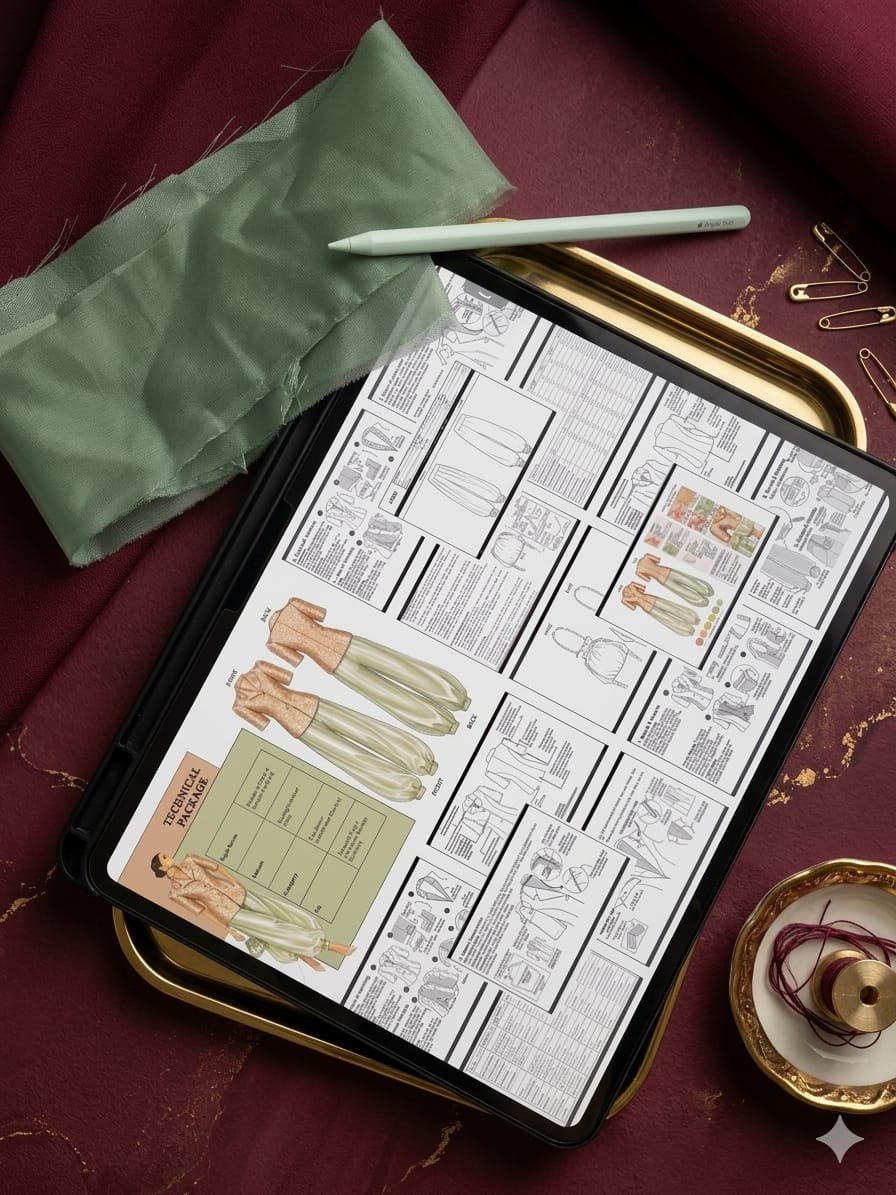
An abaya tech pack is a controlled product record for the brand, technical designer, pattern maker, sample room and manufacturer. It translates the approved design into drawings, measurements, materials, construction, artwork and revision information. Its purpose is not to make a document look technical; it is to show which product decisions are approved, which remain open and what the next supplier must verify.
Decision comparison
Abaya tech-pack pages and the decision each controls
A page is useful only when it gives the next specialist enough information to quote, develop or review the approved product without guessing.
| Page or record | Decision it should control | Evidence to attach |
|---|---|---|
| Style and revision | Correct garment, season, size scope and current issue | Style code, version, date and revision log |
| Technical flats | Silhouette, openings, panels, seams, pockets and visible details | Front, back and enlarged detail views |
| Measurement specification | Finished dimensions and how each point is measured | POM diagram, sample size, units and tolerances |
| BOM and colourways | Approved fabrics, lining, trims, labels and colour combinations | Supplier references, swatches or status notes |
| Construction and artwork | How critical areas and decorative details are executed | Call-outs, physical dimensions and source artwork |
| Sample and release record | What changed, what is approved and what remains open | Comment sheet, updated pack and linked sample status |
1. Define the product and purpose of the pack
Start with the garment route: open or closed abaya, straight or flared silhouette, layered style, bisht or kaftan direction, everyday or occasion use, intended customer, sample size and planned size range. State whether the pack is being issued for an early quotation, pattern development, sample correction or approved production reference. Those stages do not require exactly the same level of certainty.
Separate fixed decisions from proposals. A fabric direction can be listed as to be sourced, a measurement table can be marked draft and an artwork page can be awaiting a test panel. Visible status is safer than presenting an incomplete decision as approved. A tech pack supports communication, but it does not replace the sewing pattern, physical sample or supplier capability review.
- Garment type and intended use
- Style code and sample size
- Size and length scope
- Quotation, sampling or release purpose
- Approved, proposed and open decisions
2. Control style identity and revision status
Give every style a unique code, working name, season or collection where relevant, version number, issue date and short product description. Include a representative thumbnail so similar black garments are not discussed only as the one with the wide sleeve. The cover should also identify the units used in the pack and the contact responsible for technical questions.
Use a revision log that records the page or decision changed, the previous and new issue, the date and approval status. Remove superseded files from the active handoff folder or label them clearly. A supplier should be able to identify the current document without comparing email attachments or chat messages.
3. Draw the silhouette, openings and construction views
Technical flats should show the garment without fashion-illustration distortion. Include front and back views plus the side, inside or enlarged views needed to explain panels, yokes, godets, pleats, pockets, vents, layered pieces and asymmetric hems. Line types and call-outs should distinguish visible seams, fold lines, topstitching, openings and hidden construction.
For an open-front abaya, show the overlap or edge relationship, placket construction and fastening positions. For a closed style, identify the entry opening and closure. Document removable belts, scarves or underpieces as separate components with their own dimensions and materials rather than leaving them as styling props in the sketch.
4. Build an abaya-specific measurement specification
Choose points of measure from the actual construction. Common controls can include high-point-shoulder length, centre-back length, shoulder width, half chest, half hip, armhole depth, bicep, sleeve length, cuff or sleeve opening, front overlap, side opening, pocket position and hem sweep. Raglan, kimono, dropped-shoulder, cape and layered designs need different measurement logic, so a generic table should not be copied unchanged.
Define how every point is taken on the finished garment and use one unit system. State the sample size and any approved tolerances that the responsible technical team or manufacturer can apply. A number without a point-of-measure method can produce conflicting readings, while an undefined tolerance makes it difficult to judge whether the sample is acceptable.
- Finished-garment measurement, not an assumed body value
- Named start and end points
- Garment position while measuring
- Sample size and intended size range
- Tolerance only where technically agreed
- Separate controls for asymmetric or layered lengths
5. Record modesty, coverage and movement decisions
Modest-wear fit is not captured by circumference alone. Document the intended amount of ease, front opening coverage, neckline depth, sleeve reach, cuff security, slit height, side or underarm exposure, layering plan and any length option. If the garment will be sold in several lengths, identify what changes and what stays fixed rather than treating length names as self-explanatory.
Use the physical sample to review standing, walking, sitting, reaching and arm movement on the intended fit reference. Record corrections in measurable terms and return them to the current pack. The tech pack can define the check, but only a representative sample can show how the approved fabric, pattern and construction behave together.
6. Build a complete BOM and colourway record
The bill of materials should identify every component required for the agreed product: main fabric, lining or inner layer, interfacing, thread, snaps, zip, buttons, hooks, elastic, embroidery thread, beads or trims, labels, hangtags and packaging. For each item, record the description, approved or proposed quality reference, colour, placement, supplier reference when available and current approval status.
Treat opacity, drape, surface, weight, care and compatibility as product requirements to be confirmed on the actual material route. Connect every colourway to its fabric, lining, trim, thread and artwork colours so a supplier does not create unapproved combinations. If a substitute is proposed, give it a new review status instead of silently replacing the original BOM line.
- Component and placement
- Supplier quality or article reference
- Colour name and controlled reference
- Approved, proposed or substitute status
- Consumption basis where available
- Linked swatch, test or sample
7. Specify construction and finishing details
Use numbered call-outs and detail drawings for neckline finishes, front edges, plackets, closures, shoulder and sleeve joins, cuffs, pockets, side openings, linings, hems and reinforcement. Name the required construction only when it has been technically confirmed; otherwise identify the result to review and ask the pattern maker or manufacturer to propose a suitable method for approval.
Critical details may need seam cross-sections, stitch or finish references, fold widths, topstitch distances, pressing direction and reinforcement points. Check that the flats, construction page, measurement table and BOM agree. A snap visible on the flat but missing from the BOM, or a lined body with no lining construction, creates a preventable supplier question.
8. Control embroidery, beadwork and print artwork
Decorative artwork needs more than a screenshot. Include the source file or agreed production format, physical motif dimensions, colours, technique, orientation, repeat or mirrored rule, application notes and placement from stable garment or seam points. State whether one artwork size applies to all garments or whether placement or scale changes by size or length.
For embroidery, beadwork, appliqué or mixed techniques, use a labelled test panel or relevant sample to review density, puckering, backing, component quality, weight, drape, reverse-side finish and care before release. The pack should link to the approved artwork and test version. A visual approval on paper does not prove how a decorative process will behave on the selected fabric.
9. Keep sizes, colourways and optional features traceable
Separate style changes from size grading and colour changes. A new sleeve shape, pocket or embellishment layout is a design revision; a size range needs approved grade rules or measurements within the agreed technical route; a colourway needs controlled material and artwork combinations. Do not hide these different decisions inside one unlabelled page.
List optional features only when the commercial route supports them. If a style can be ordered open or closed, lined or unlined, or with different cuffs, treat each approved configuration as a clear variant or separate style code. This protects quotation and sampling from a menu of possibilities that no one has priced or tested together.
10. Turn sample comments into one current revision
Review the sample against the issued pack and its stated purpose. Measure the garment, inspect construction and finishing, assess coverage and movement, and compare materials and artwork with the approved references. Consolidate comments into one numbered record with photographs or diagrams where useful, the observed result, required change, responsible party and approval status.
After corrections are agreed, update the drawings, measurements, BOM, construction and artwork pages affected by the decision. Do not treat a chat message as the permanent instruction while the pack still shows the previous version. Link the accepted sample stage and date to the released file so the next supplier knows what evidence the document represents.
- One comment number per decision
- Current and required result
- Measurement or annotated image
- Owner and status
- Affected pack pages updated
- Sample stage and approval recorded
11. Preflight the supplier handoff and Zameett scope
Before sending, export the complete PDF and review that file rather than only the editable source. Confirm that text and dimensions are legible, units and style codes are consistent, all required pages and linked artwork are present, colour names match the BOM, revision details agree and unresolved items are listed. Give the supplier the intended use, quantity and timing assumptions separately so the same pack can be interpreted in its commercial context.
Zameett's abaya tech-pack service can cover agreed technical flats, construction call-outs, materials, measurement specifications, colourways, embellishment placement and final PDF or editable files where stated in the selected package or proposal. Sewing patterns, standalone grading, physical sampling and manufacturing are separate scopes unless expressly included. The brief is reviewed and the exact pages, source files, revisions, timing, assumptions and exclusions are confirmed before payment.
- Current locked PDF
- Agreed editable or artwork files
- Open-issues list
- Sample or swatch references
- Quantity and quotation assumptions
- Named contact for technical questions
Frequently Asked Questions
Questions about this topic
What should an abaya tech pack include?
The exact contents depend on the style and project stage, but a useful pack normally includes style and revision control, technical flats, measurement specifications, materials and colourways, construction details, artwork or embellishment placement, labels or packing where relevant, and a clear sample or handoff record.
Is a tech pack the same as a sewing pattern?
No. A tech pack documents the approved garment decisions and specifications, while a sewing pattern defines the pieces used to cut and assemble the garment. The pattern and physical sample still need development and review within the responsible supplier route.
Which measurements belong in an abaya tech pack?
Use the points needed by the actual construction. These can include garment length, shoulder, chest, hip, armhole, bicep, sleeve length, cuff opening, front overlap, slit or pocket positions and hem sweep, each with a defined measurement method.
How should abaya embroidery or beadwork be documented?
Provide the artwork version, physical dimensions, colours, technique, orientation, placement from stable garment points, mirrored or repeated rule, size-specific changes and approval status. A labelled panel or representative sample should confirm the result on the intended material.
Can one abaya tech pack be sent to several manufacturers?
A controlled pack can support comparable discussions, but every manufacturer should still review capability, pattern and material assumptions, sample requirements, MOQ, quotation, timing and technical questions for the actual project before commitment.
Apply This to Your Collection
Develop your next product with a clear scope.
Share your category, style count, available files, quantity and target date. Zameett will recommend the most suitable design, technical-development, sampling or reviewed production route.