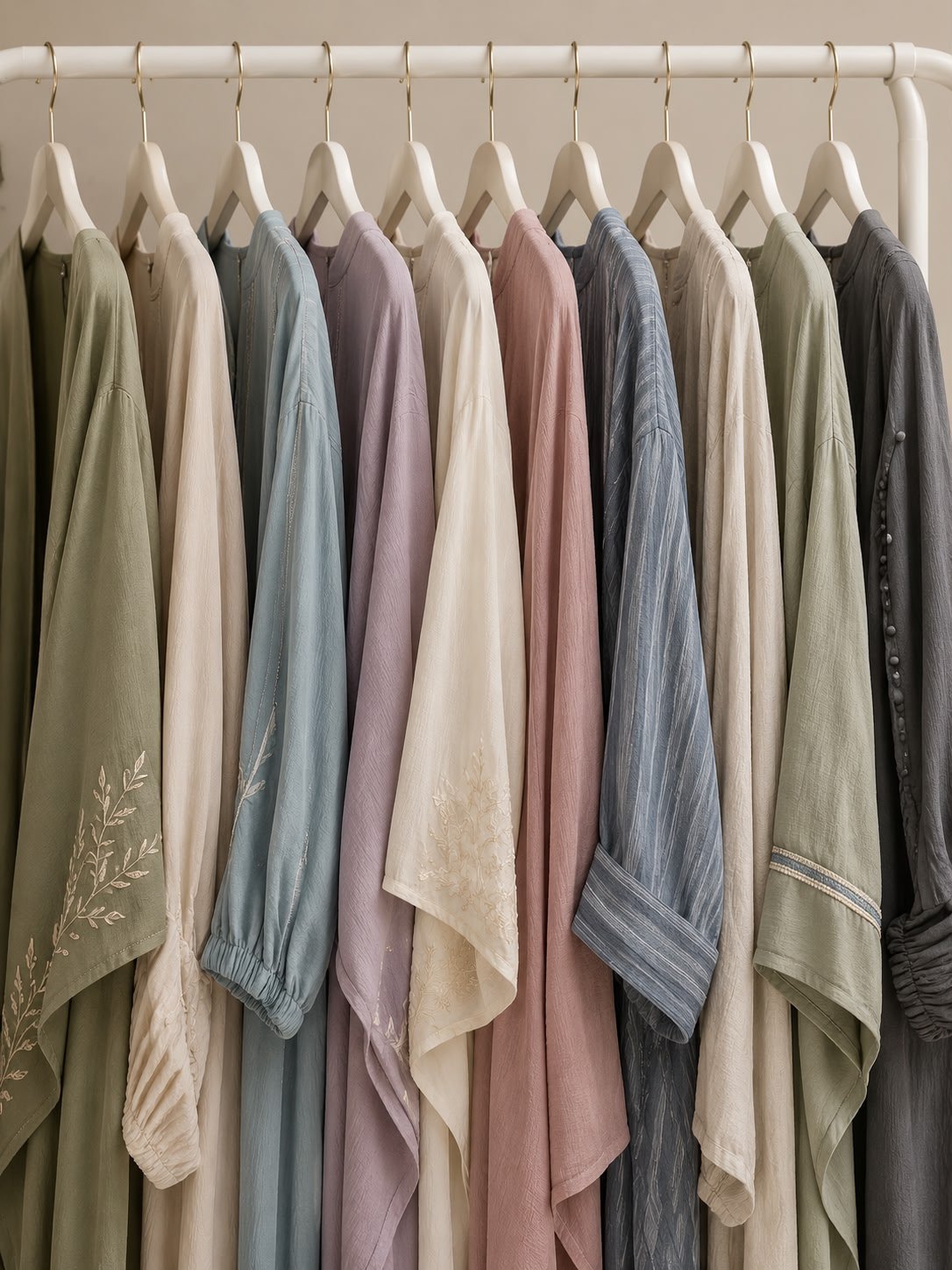
Finding a modest-fashion manufacturer is a due-diligence and product-fit decision, not a search for the most confident sales page or lowest unit price. A supplier may be legitimate yet unsuitable for your garment, quantity, material, embellishment, approval process or destination. The useful question is not simply ‘Are you a factory?’ but ‘Who will perform each part of this project, against which approved references, and how can the answer be checked before larger commitments are made?’
Decision comparison
Turn supplier claims into checks
A claim can start a conversation, but the next decision should depend on evidence relevant to your actual product and order.
| Supplier claim | Evidence to request | Decision it should support |
|---|---|---|
| We specialise in modest wear | Comparable construction details, sample questions and product-specific answers | Category fit |
| We handle production | Named responsibilities, locations and disclosed specialist suppliers | Operating model |
| We can source the fabric | Physical quality reference, specification, availability and substitution route | Material approval |
| Quality is guaranteed | Written checkpoints, criteria, records and response to nonconformity | Inspection plan |
| MOQ is flexible | Minimum basis by style, colour, material, artwork and component | Workable order matrix |
| We can deliver on time | Project-specific schedule, dependencies, approvals and capacity assumptions | Commercial timeline |
1. Choose the production route before the supplier
Decide whether the project needs ready-made wholesale stock, private labelling of an existing product, adaptation of an existing base, or custom development from your own design. These routes require different design input, sample work, ownership discussions, MOQs, materials, timelines and supplier capabilities.
A supplier can be strong in one route and unsuitable for another. Catalogue experience does not prove custom-development discipline, while a technical sample room does not automatically prove repeatable bulk capacity. Write the route and current development stage at the top of your enquiry so both parties are evaluating the same job.
- Ready-made wholesale
- Private label on an existing style
- Modified existing product
- Custom product development
- Sampling-only stage
- Approved product moving to production
2. Send one controlled manufacturer brief
A message asking only for price and MOQ leaves the product undefined. Give every candidate the same controlled brief: garment category, style count, design or technical files, fabric and lining direction, construction, embellishment, labels, packaging, size range, quantity by style and colour, destination and target timing.
Mark confirmed requirements, preferences and open decisions separately. Ask the supplier to state assumptions and missing information before quoting. The questions they ask can reveal whether they understand opacity, drape, coverage, sleeve movement, garment length, artwork placement and the handling needed for a modest product.
3. Verify identity, location and payment details
Confirm the legal or trading identity you will contract with, the operating address, named contact, invoicing identity and payment destination. Check whether those details agree across the quotation, invoice, website, email domain and the information independently available to you. A social profile or marketplace badge should not be treated as the complete verification record.
Ask where development, sampling, cutting, sewing, embellishment, finishing, inspection and packing will occur. If a supplier provides registration, certification, audit or compliance evidence, check the issuer, scope, facility, validity and relevance rather than relying on a logo. Zameett does not treat unverified documents or marketing claims as proof.
- Contracting and invoicing identity
- Physical operating location
- Authorised project contact
- Payment account alignment
- Evidence issuer and scope
- Named production locations
4. Understand the operating model
Direct factories, specialist workshops, sourcing partners and production coordinators can each be suitable when responsibilities are transparent. The risk is not automatically the presence of another supplier; it is an undisclosed handoff that changes quality, communication, price, intellectual-property handling or accountability.
Request a responsibility map for technical preparation, pattern or sample work within the selected route, material purchasing, cutting, decoration, sewing, finishing, inspection, packing, export preparation and shipping. Confirm which party approves substitutions and who remains accountable for each deliverable. Do not infer factory ownership or in-house capability from photographs alone.
5. Check experience against your construction
Ask for evidence comparable in construction and process, not merely a similar colour or silhouette. An unlined straight abaya does not prove capability for a lined bias style, layered sleeve, concealed opening or dense embellishment. Review inside seams, hems, closures, lining attachment, artwork backs and finished presentation where permission and confidentiality allow.
Ask how the supplier controls modest-wear issues relevant to your design: opacity in the chosen colour, shoulder balance, sleeve mobility, coverage through movement, garment length, hem level, drape, lining and embellishment weight. Specific production questions and limitations are more credible than a promise that any style can be made.
6. Use communication as an early test
Before sampling, observe whether the supplier answers numbered questions, identifies missing inputs, separates estimates from confirmed terms and returns revised information in a controlled document. Fast replies are useful only when the answer is accurate and traceable.
Agree on the official communication channel, decision-maker, file naming, revision method and approval format. After a call, summarise the decisions in writing and ask for corrections. If quantity, material, construction or timing changes, require the quotation and schedule assumptions to be updated instead of relying on an old chat message.
- Questions answered in the same sequence
- Assumptions clearly labelled
- Current files easy to identify
- Changes acknowledged in writing
- Responsibilities assigned
- Commercial effect of changes recorded
7. Scope a representative paid sample
A paid sample is a development and verification step, not free evidence of unlimited production capability. Confirm what the sample is intended to prove, the materials and components it will use, the included revision rounds, the feedback method, the handover files, courier responsibility and the decision required at completion.
Measure and review the sample against the current specification. Check proportion, coverage, movement, opacity, construction, closures, artwork, comfort and finish. Record corrections with numbered measurements and annotated details. Do not release bulk work until the relevant representative sample and connected specification are approved for the work they authorise.
- Sample purpose and stage
- Representative and substitute materials
- Included revisions
- Measurement and review method
- Approval or resample criteria
- Connection to production quotation
8. Verify material traceability and repeatability
Ask how the proposed main fabric, lining, trims, labels and decoration components will be identified and approved. A commercial name such as nida or crepe is not enough to repeat a specific quality. Use a supplier code, specification and physical reference appropriate to the product, and record accepted limitations.
Confirm whether the quoted material is stock, specially ordered or made to a requirement; which minimum applies; how shade or quality variation will be checked; and what happens if the item becomes unavailable. Reorders need a documented substitution and approval route because a similar-looking fabric can change opacity, drape, shrinkage, pressing and finished measurements.
9. Break MOQ and capacity into real constraints
Manufacturing MOQ is project-specific. It may be driven by the order, style, colour, fabric, dye lot, artwork setup, trim, label, packaging component, cutting efficiency or a specialist supplier. Ask for the minimum basis and allowed size breakdown rather than accepting one headline number.
Capacity should also be discussed for the actual product and period. Ask what work must be completed before a production slot is confirmed, which approvals affect the schedule, which specialist operations sit outside the main line and how changes are handled. Do not treat a generic monthly capacity figure as a promise for your order.
- MOQ per order, style and colour
- Material and component minimums
- Permitted size split
- Dependencies before capacity confirmation
- Effect of artwork or construction complexity
- Conditions for a repeat order
10. Define quality checks and defect decisions
Replace ‘high quality’ and ‘100% inspection’ with an agreed plan. Identify the approved references, checkpoints, critical measurements, workmanship and appearance criteria, who performs each check, how units are selected, which records are shared and what happens when the agreed condition is not met.
Useful checkpoints can include bulk-material review, first-piece comparison, in-process construction or measurement checks, decoration review, finished-garment inspection and packing reconciliation. The exact method must suit the product, quantity, risk and supplier arrangement. Inspection evidence reports what was checked; it does not replace accurate specifications, approved materials or process control.
11. Normalise quotations and written terms
Put each quotation beside the same brief and separate development, sample, unit, order-level and delivery costs. Record material quality, consumption assumptions, construction, embellishment, trims, labels, packaging, quantity matrix, included revisions, inspection responsibilities, payment stages, delivery basis, exclusions, currency and quote validity.
A lower unit price may exclude setup, packaging, inspection, freight or material quality included elsewhere. Investigate differences rather than averaging them. Before payment, confirm scope, approvals, MOQ, project-specific timeline, payment terms, change control, cancellation or defect process, responsibilities and ownership or handover of included files in writing. Obtain appropriate legal, tax and import advice for the relevant jurisdictions.
12. Start with a controlled commitment
Choose the smallest commercially workable step that answers the next material uncertainty. That may be paid technical development, a fabric or decoration test, a representative sample or a defined pilot production route. It should have a written deliverable, acceptance decision and limit on what the result proves.
A successful sample does not automatically prove bulk consistency, and one completed order does not guarantee future material availability or capacity. Monitor whether the supplier follows the current specification, reports problems early, records approvals, reconciles quantities and supports a realistic repeat route. Increase commitment only when the evidence becomes stronger.
- One defined objective
- Current controlled references
- Named approval decision
- Budget and payment stage
- Exit or resample condition
- Evidence needed for the next commitment
13. Review a project with Zameett
Zameett provides fashion design and technical-development services across apparel categories, with sampling and manufacturing specialisation mainly in modest wear and abayas. Physical-production enquiries are reviewed for product fit, supplier route, quantity and destination; Zameett does not claim universal capability, factory ownership, MOQ or timing.
Share your garment category, route, style count, available files, material and embellishment direction, size and colour plan, proposed quantities, branding, packaging, destination and target timing. The proposal confirms deliverables, revisions, fees, supplier responsibilities, approvals, MOQ, project-specific timeline, assumptions and exclusions before payment.
- Product route and development status
- Current design or technical files
- Style-colour-size quantity matrix
- Material and artwork direction
- Destination and target date
- Open risks or supplier questions
Frequently Asked Questions
Questions about this topic
How do I find a reliable modest-fashion manufacturer?
Start with one controlled brief, then compare suppliers using verifiable identity, product-relevant evidence, a representative sample, material references, a responsibility map, written quality checkpoints and normalised commercial terms. Reliability should be tested through progressively larger commitments rather than inferred from marketing claims.
How can I tell whether a supplier is a factory or a middleman?
Ask who performs each stage, where it happens, which specialist suppliers are involved and who is accountable. Verify the contracting identity and production locations using independent evidence where practical. A coordinator is not automatically unsuitable; undisclosed responsibilities and unsupported ownership claims are the concern.
Should I order a sample before bulk production?
Yes. Scope a paid representative sample with clear materials, revision rounds and approval criteria, then measure and review it against the current specification. Record what it proves and which sizes, colours, materials, artwork or packaging still require separate approval.
What should I ask about a manufacturer's MOQ?
Ask whether each minimum applies to the total order, style, colour, fabric, artwork, trim, label or packaging component; confirm the allowed size split and which constraint changes at different quantities. No universal MOQ applies to every modest-wear project.
Can Zameett help review a modest-wear production route?
Zameett reviews project-specific modest-wear and abaya enquiries covering design or technical-development needs, sampling status, proposed quantity, materials, embellishment, branding, packaging, destination and supplier route. Scope, responsibilities, MOQ, timeline, fees and exclusions are confirmed before payment.
Apply This to Your Collection
Develop your next product with a clear scope.
Share your category, style count, available files, quantity and target date. Zameett will recommend the most suitable design, technical-development, sampling or reviewed production route.