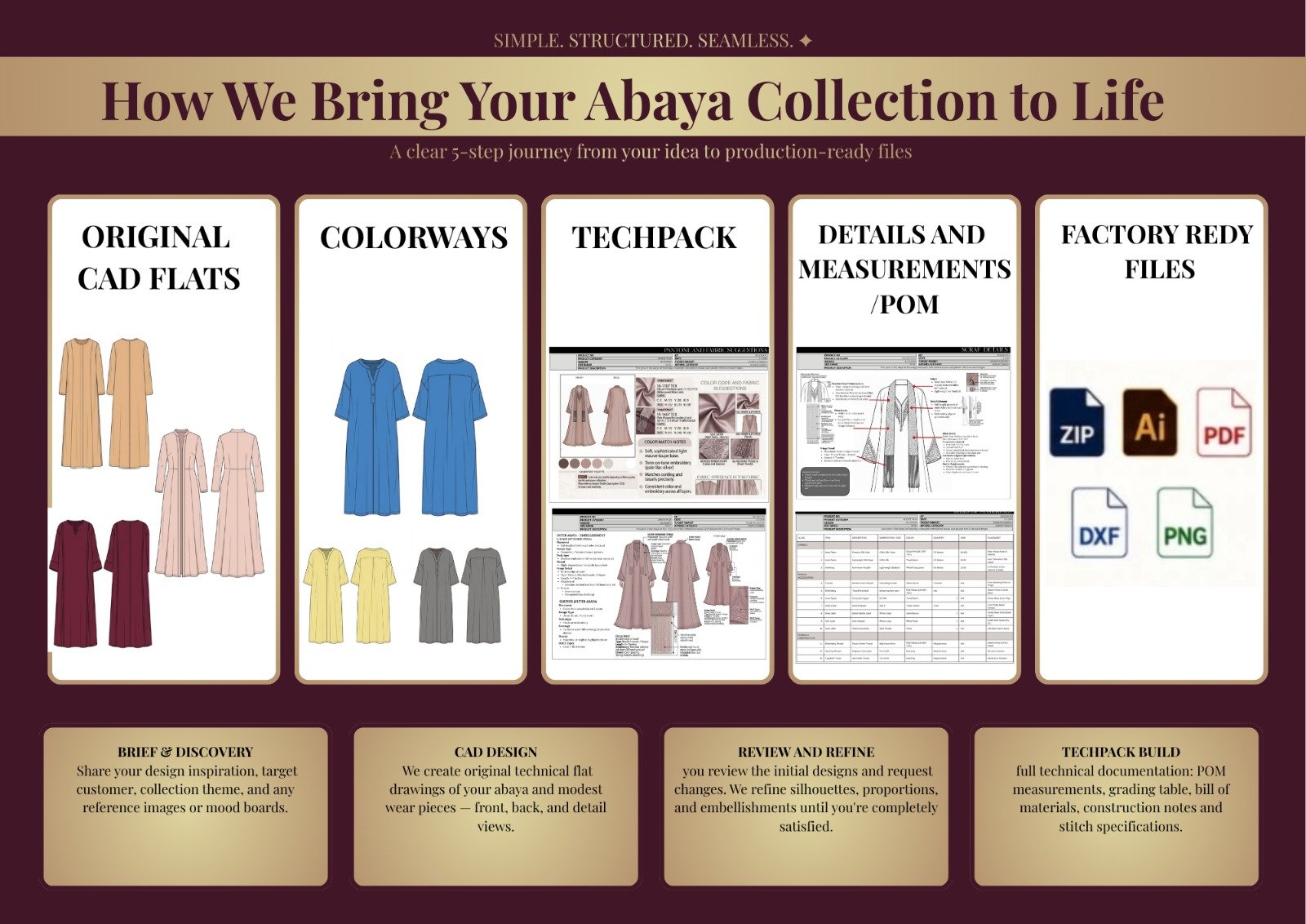
The abaya manufacturing process is a controlled sequence of product decisions, supplier work and written approvals. It can include design definition, technical development, material selection, sampling, production preparation, cutting, embellishment, sewing, finishing, inspection, packing and dispatch. The exact route changes with the garment and selected suppliers, but each stage should close a known question before the next financial or production commitment is made.
Decision comparison
Five approval gates in an abaya production route
Each approval should identify the reference reviewed, the decision made and the work that may proceed next.
| Approval gate | Evidence to review | What the approval authorises |
|---|---|---|
| Product scope | Brief, design direction, quantity and open assumptions | Quoted development work |
| Material direction | Physical fabric, lining, trims and test observations | Representative sampling |
| Product standard | Corrected sample, measurements, construction and artwork | Final production preparation |
| Production release | Current specification, approvals, order matrix and packing plan | Bulk material commitment and cutting |
| Dispatch release | Agreed inspection evidence, packing list and shipping documents | Handover to the confirmed delivery route |
1. Confirm the product and commercial scope
Start by defining what is being developed: open or closed abaya, silhouette, intended use, coverage, length direction, size range, fabric character, lining, closures, pockets, artwork, branding, packaging, quantity by style and colour, destination and target timing. A plain unlined everyday style and a layered embellished occasion style do not share one production route.
Separate confirmed requirements from preferences and unresolved decisions. The supplier or development team can then state assumptions instead of silently choosing them. Quotation, MOQ, timeline, sample stages, supplier responsibilities and payment scope remain project-specific and should be confirmed before payment.
- Style and customer use
- Size, colour and quantity matrix
- Material and care direction
- Artwork, trims and branding
- Packaging and destination
- Target timing and open assumptions
2. Convert the design into a controlled specification
A moodboard communicates direction but does not define a repeatable garment. Technical flats, construction call-outs, a bill of materials, measurement points, artwork dimensions, label positions and revision status give the people preparing samples and production a shared reference.
Abaya documentation should make coverage and movement decisions visible: shoulder type, front opening or overlap, body ease, sleeve shape and opening, garment length, hem sweep, lining coverage and the relationship between layered pieces. Zameett provides fashion design and technical-development services across apparel categories; any pattern or grading activity within a sampling or production route must be confirmed as part of that project and is not advertised as a standalone service.
3. Select and approve physical materials
A fabric name such as nida, crepe or satin is not a complete specification. Review the actual supplier quality in the intended colour for composition or commercial reference, usable width, weight or handle, opacity, drape, surface, stretch or recovery where relevant, shrinkage, colour behaviour, pressing response and care route. Test the main fabric and lining together when they will be worn together.
Give trims the same discipline. Record closures, zips, thread, interfacing, elastic, labels, hangtags and packaging components by approved reference. If an exact component cannot be repeated, require the proposed substitute to be reviewed before it is used. Keep dated physical swatches or another agreed traceable reference connected to the style file.
- Main fabric and lining reference
- Approved shade or colour standard
- Trim and closure articles
- Artwork threads or components
- Label and packaging references
- Test results and accepted limitations
4. Prepare the first representative sample
The first prototype is used to test proportion, construction logic, movement, coverage and the interpretation of the specification. It may use development materials rather than every final bulk component, so its purpose and limitations must be stated before review.
Measure the sample using the documented points of measure, then assess it on the intended body, fit model or suitable form. Review shoulder balance, sleeve movement, front behaviour, body ease, length, hem level, opacity, lining, closures and decorative placement. Photographs can support the record but do not replace measurements, physical feel or a written decision.
5. Record corrections and control revisions
Convert feedback into one consolidated correction document tied to the sample and file version. Replace comments such as ‘make it looser’ with the current measurement, required measurement, point of measure and any connected pattern or construction effect. Mark artwork changes with dimensions and stable placement references.
When several people send separate chat messages, the supplier can combine instructions from different revisions. Nominate the current correction record, resolve contradictions and issue an updated specification after accepted changes. A material, construction or artwork change can affect quotation, MOQ, sample need and schedule, so commercial assumptions should be reconfirmed when scope changes.
- Sample and revision identifier
- Measured issue and requested result
- Annotated image or drawing
- Responsible party
- Approval, rejection or resample decision
- Commercial effect where applicable
6. Approve the production standard
Before bulk release, confirm a representative product standard using the material, colour, trims, construction, artwork and finishing required by the agreed production route. Depending on the project, this may be described as a corrected sample, pre-production sample or another named approval sample. The label matters less than documenting exactly what it represents.
Do not assume one approved base-size garment validates every graded size, colourway, decoration variation or packaging configuration. Confirm which additional size, shade, component or artwork checks are required. Link the approved sample to the current measurement specification, material references and artwork so the production team has one controlled standard.
7. Build the production release pack
The release pack should answer what to make, in which approved version, from which materials, in what quantities and how acceptance will be judged. Include the style-colour-size order matrix, current technical file, approved sample reference, material and trim records, artwork versions, tolerances, labels, folding and packing instructions, inspection responsibilities and delivery assumptions.
Record remaining buyer-supplied items, supplier dependencies and due dates before authorising commitments. Bulk cutting should not begin while fabric shade, artwork, measurement changes, quantity split or packaging is still described as ‘to be confirmed.’ Written production release creates a visible decision point for both brand and supplier.
- Approved file and sample version
- Style-colour-size quantity table
- Material and artwork references
- Measurement tolerances
- Labels and packing instructions
- Inspection and dispatch responsibilities
8. Inspect, prepare and cut bulk fabric
Bulk material should be checked against the approved reference before it is committed to cutting. The agreed checks may cover identity, shade continuity, usable width, visible faults, surface condition and the results of any required performance test. Fabric preparation can include relaxation or another handling method appropriate to the material and supplier process.
Marker, lay and cutting decisions must follow the approved pattern route, size quantities, fabric width and direction requirements. Nap, sheen, print direction, motif matching and face orientation can limit how pieces are arranged. Keep cut parts identified by style, size, colour and relevant shade or lay information so they do not become mixed during decoration or sewing.
9. Control embellishment and panel work
Embroidery, beadwork, sequins, appliqué, print, laser work or other decoration may happen before or after assembly depending on technique and access. The approved artwork should state version, physical dimensions, colours or components, density or technique where relevant, orientation and placement from stable garment points.
Use a first panel, strike-off or other agreed representative test to check appearance, puckering, weight, drape, backing, comfort, colour and attachment before repeating the work. Keep left and right orientation, size-dependent placement and repair responsibility visible. Decoration that passes visually but distorts the fabric can still fail the approved garment standard.
10. Sew, finish and check during production
Cut and decorated components move through an operation sequence determined by the approved construction. Controls should not wait until the final carton. First-piece and in-process checks can identify seam, measurement, closure, artwork, handling or workmanship issues while correction is still contained.
Finishing can include thread cleaning, pressing, closure checks, final attachment work and presentation preparation. Pressing temperature, pressure and handling must suit the approved fabric and decoration. Record recurring defects and corrective decisions rather than repeatedly repairing symptoms without checking the operation or component causing them.
- First-piece comparison
- Critical measurement checks
- Seam and hem construction
- Closure and pocket function
- Artwork position and security
- Clean handling and pressing
11. Inspect finished garments against the agreement
The inspection plan should be agreed for the specific order rather than implied by a generic promise of ‘100% quality’ or an unsupported standard. Define who inspects, when, how units are selected, which measurements and visual criteria apply, how defects are recorded, and what happens when the agreed acceptance condition is not met.
Compare finished garments with the approved product standard and current specification. Relevant checks can include measurements within stated tolerances, balanced length, coverage, seams, hems, closures, lining, artwork, labels, cleanliness, damage and colour or shade consistency. An inspection reports observed conformity; it does not replace correct specifications, material approval or process control.
12. Reconcile packing and release dispatch
Pack only the approved garments using the confirmed labels, folding method, protective materials, size or barcode stickers, assortments and outer-carton instructions. Reconcile the packed quantities with the style-colour-size order matrix, packing list and carton count. Record shortages, overages, repairs or rejected units instead of hiding them inside a total.
Before dispatch, confirm the named delivery route, shipping documents, destination details, responsibility for freight, insurance where applicable, duties and taxes, and the evidence required for release. Keep the final approved files, material references, correction history, inspection record and packing information together for claims, repeat orders or controlled changes.
13. Scope a Zameett modest-wear project
Zameett supports design and technical development across apparel categories, with sampling and manufacturing specialisation mainly in modest wear and abayas. A project can begin from an early concept, existing design or technical file, but the deliverables and selected route depend on what is already confirmed and what still needs development.
Share the garment categories, style count, available files, proposed quantities by style and colour, size direction, fabric and lining requirements, artwork, branding, packaging, destination and target timing. Zameett reviews feasibility and confirms deliverables, revisions, fees, supplier responsibilities, MOQ, project-specific timeline, approvals, assumptions and exclusions before payment.
- Current concepts or technical files
- Style, colour, size and quantity plan
- Material and artwork direction
- Sample status and required decisions
- Labels, packaging and destination
- Target date and known constraints
Frequently Asked Questions
Questions about this topic
What are the main stages of the abaya manufacturing process?
A controlled route can include product scoping, technical development, physical material approval, prototype sampling, corrections, production-standard approval, release documentation, bulk material checks, cutting, embellishment, sewing, finishing, inspection, packing and dispatch. The exact sequence depends on the approved garment and selected suppliers.
Should an abaya sample be approved before bulk production?
Yes, the relevant representative sample and connected specification should be approved before the work they authorise proceeds. Record what the sample represents and which sizes, colours, materials, artwork or packaging details still require separate confirmation.
What should be approved before bulk fabric is cut?
Confirm the current technical specification, approved sample reference, bulk material and trims, artwork, style-colour-size quantity matrix, tolerances, labels, packing instructions, inspection responsibilities and written production release. Open decisions should be resolved or explicitly excluded.
How is quality controlled during abaya production?
Use project-specific checks at appropriate stages, such as bulk material review, first-piece or in-process checks, critical measurements, workmanship and decoration checks, final inspection and packing reconciliation. The inspection method, sample basis, criteria, responsibility and response to defects should be agreed in writing.
How long does the complete abaya manufacturing process take?
There is no responsible universal timeline. Design readiness, sample rounds, material availability, colour and embellishment work, quantity, approval speed, supplier capacity, packaging and delivery route all affect the schedule. Zameett confirms a project-specific timeline after reviewing the complete brief.
Apply This to Your Collection
Develop your next product with a clear scope.
Share your category, style count, available files, quantity and target date. Zameett will recommend the most suitable design, technical-development, sampling or reviewed production route.